Virginia DUI Checkpoints: Your Rights and What Police Can/Cannot Do
Navigating Virginia DUI Checkpoints: Understanding Your Rights and Police Limitations
Seeing the flashing lights and line of cars ahead can be unnerving – it’s likely a sobriety checkpoint, commonly known as a DUI checkpoint. While intended to deter drunk driving and enhance road safety, these stops involve a brief seizure under the Fourth Amendment. Understanding the rules governing these checkpoints in Virginia, what law enforcement officers are permitted to do, and knowing your rights is crucial for navigating these encounters.
This article provides essential information for Virginia drivers regarding DUI checkpoints. If you have been arrested or charged following a checkpoint stop, consulting with an experienced Virginia DUI defense attorney is vital.
Are DUI Checkpoints Legal in Virginia?
Yes, DUI checkpoints are generally considered legal in Virginia, provided they meet specific constitutional and state requirements. The U.S. Supreme Court addressed the constitutionality of sobriety checkpoints in the case of Michigan Dep’t of State Police v. Sitz, 496 U.S. 444 (1990). The Court ruled that the state’s interest in preventing drunk driving accidents outweighs the minor intrusion on drivers briefly stopped at a checkpoint, as long as the checkpoint is conducted reasonably.
Essentially, the courts perform a balancing test: Does the public safety benefit (reducing DUI fatalities and injuries) justify the brief infringement on individual liberty (being stopped without individualized suspicion)? The Supreme Court, and subsequently Virginia courts, have generally found that properly executed checkpoints pass this test. However, the legality hinges entirely on how the checkpoint is planned and conducted.
Strict Requirements for Lawful Virginia Checkpoints
To be constitutional, a Virginia DUI checkpoint cannot be arbitrary or left to the unfettered discretion of officers in the field. Law enforcement agencies must follow strict guidelines established through case law and departmental policy. Failure to adhere to these requirements can render the stop unlawful and any evidence obtained potentially inadmissible in court.
Key requirements for a valid Virginia DUI checkpoint typically include:
- Supervisory Approval and Planning: The decision to establish a checkpoint, including its location, time, and duration, must be made by supervisory law enforcement personnel, not officers acting on their own initiative. There must be a pre-approved, detailed operational plan.
- Neutral Selection Formula: Officers cannot single out drivers based on hunches or arbitrary reasons. The plan must dictate a neutral method for stopping vehicles (e.g., stopping every car, every third car, every fifth car). This formula must be applied consistently.
- Site Selection Based on Safety and Effectiveness: The location chosen should ideally be based on data indicating a history of DUI-related incidents or arrests. It must also prioritize the safety of both officers and the motoring public, with adequate lighting, visibility, and space for vehicles to pull over safely.
- Adequate Warning and Identification: Drivers should receive advance notice that they are approaching a checkpoint. This includes clear signage, visible police presence (marked cars, uniformed officers), and often flashing lights well before the stop point. The nature of the stop (sobriety checkpoint) should be apparent.
- Minimized Intrusion and Duration: The initial stop should be brief, lasting only long enough for the officer to look for signs of impairment and ask a few routine questions. Drivers should not be detained longer than necessary unless the officer develops reasonable suspicion of DUI or another crime.
- Clear Guidelines for Officers: The operational plan should provide clear instructions to officers on how to conduct the initial stop, what observations to make, and the criteria for directing a driver to a secondary screening area for further investigation.
If a checkpoint deviates significantly from these established guidelines, a defense attorney may argue that the stop was unconstitutional, potentially leading to the suppression of evidence obtained during the stop.
What Happens When You’re Stopped at a VA Checkpoint?
When you enter a designated checkpoint area, you will be guided by officers. The initial interaction is typically very brief:
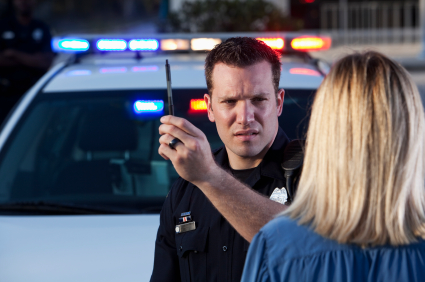
- The Initial Stop: An officer will approach your vehicle, usually asking for your driver’s license and registration. They are simultaneously observing you and the vehicle’s interior (using a flashlight at night) for any obvious signs of alcohol impairment.
- Brief Questioning: The officer might ask questions like, “Have you had anything to drink tonight?” or “Where are you coming from?”. Their primary goal is to detect slurred speech, the odor of alcohol, bloodshot eyes, or confusion.
- Decision Point: Based on this brief interaction (often lasting only 15-30 seconds), the officer must decide whether there is sufficient reason to detain you further. If no signs of impairment are detected, you should be allowed to proceed promptly. If the officer observes signs suggesting impairment, you will likely be directed to a secondary screening area nearby for further investigation.
During this initial phase, officers cannot detain you excessively without cause or conduct a search of your vehicle unless they have consent or develop probable cause (e.g., seeing an open container of alcohol in plain view).
Reasonable Suspicion: The Key to Further Investigation
The transition from the initial brief stop to a more prolonged detention and investigation hinges on reasonable suspicion. This is a crucial legal standard. Reasonable suspicion means an officer must have more than just a hunch or gut feeling that you might be impaired. They must be able to point to specific, articulable facts that, taken together, would lead a reasonable person to suspect that you are driving under the influence.
Factors that can contribute to reasonable suspicion at a checkpoint include:
- Strong odor of an alcoholic beverage coming from the vehicle or your breath.
- Slurred or incoherent speech.
- Bloodshot, watery, or glassy eyes.
- Difficulty retrieving your license or registration.
- Admission to consuming alcohol (“I only had one beer”).
- Open containers of alcohol visible within the vehicle.
- Unexplained poor coordination or fumbling.
- Conflicting or illogical answers to simple questions.
If an officer develops reasonable suspicion based on such observations, they can lawfully detain you for a longer period to conduct further investigation. This usually involves asking you to step out of the vehicle and participate in Field Sobriety Tests (FSTs) and potentially take a Preliminary Breath Test (PBT).
Your Rights During a Virginia DUI Checkpoint Stop
Even though checkpoints are legal intrusions, you still retain important constitutional rights. Knowing and respectfully asserting these rights can be critical.
Right to Remain Silent
You have the right to remain silent under the Fifth Amendment. While you must provide your name, driver’s license, and vehicle registration when asked, you are not required to answer potentially incriminating questions like “How much have you had to drink tonight?” or “Where are you coming from?”. Politely stating, “I choose not to answer that question” is within your rights. Admissions to drinking, even small amounts, can be used to build reasonable suspicion or probable cause against you.
Field Sobriety Tests (FSTs)
Standardized Field Sobriety Tests (FSTs) – such as the Horizontal Gaze Nystagmus (eye test), Walk-and-Turn, and One-Leg Stand – are commonly requested if an officer suspects impairment. In Virginia, participation in these roadside tests is voluntary. You have the right to politely refuse to take FSTs. These tests are subjective, often difficult to perform perfectly even when sober, and designed to provide evidence against you. Refusal cannot be used as evidence of guilt in court for the DUI charge itself, though the officer may still develop probable cause based on other factors.
Preliminary Breath Test (PBT)
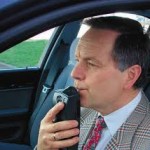
An officer may ask you to take a Preliminary Breath Test (PBT), a small handheld device used roadside to estimate your Blood Alcohol Content (BAC). Similar to FSTs, submitting to a PBT in Virginia before a formal arrest is generally voluntary. The results are typically not admissible in court to prove your BAC level for the DUI conviction itself but can be used by the officer to establish probable cause for an arrest. Refusal of the PBT carries no separate penalty like the official post-arrest test.
Implied Consent & Official Breath/Blood Test
This is where things change significantly. Virginia operates under an Implied Consent law (Virginia Code § 18.2-268.2). By driving on Virginia roads, you have implicitly agreed to submit to a formal chemical test (breath or blood) to determine your BAC if you are lawfully arrested for DUI. Refusal to submit to this official test after a valid arrest carries serious administrative penalties, including mandatory driver’s license suspension, separate from any DUI penalties. This is different from the voluntary PBT and FSTs performed roadside before an arrest.
Right to Refuse Searches
Unless an officer has probable cause (seeing drugs or open containers in plain view, smelling marijuana emanating strongly from the car) or your consent, they cannot search your vehicle during a checkpoint stop. You have the right to refuse consent to a search of your car. If an officer asks, “Do you mind if I take a look inside your vehicle?”, you can politely reply, “I do not consent to a search.”
Right to Contact an Attorney
While you generally do not have the right to speak to an attorney before deciding whether to take the official post-arrest breath or blood test required by Implied Consent, you absolutely have the right to counsel after being arrested. Once arrested, clearly state that you wish to remain silent and that you want to speak to an attorney.
Challenging an Arrest from a DUI Checkpoint
Just because an arrest occurred at a checkpoint does not automatically mean a conviction will follow. DUI cases originating from checkpoints can be challenged on several grounds:
- Improper Checkpoint Procedures: If the checkpoint failed to meet the strict legal requirements (e.g., lack of supervisory plan, non-neutral selection, inadequate warning signs), the initial stop may have been unconstitutional.
- Lack of Reasonable Suspicion: If the officer did not have sufficient, articulable facts to justify detaining you for FSTs or further investigation beyond the initial brief stop.
- Lack of Probable Cause for Arrest: If the totality of the circumstances did not support a lawful arrest for DUI.
- Improper Administration of FSTs: If the officer failed to administer the field sobriety tests according to standardized protocols.
- Issues with Breathalyzer/Blood Test: Challenges related to the calibration, maintenance, or administration of the official chemical test.
An experienced DUI lawyer can meticulously review the details of the checkpoint and your stop to identify potential violations of your rights or procedural errors.
Conclusion: Protecting Your Rights and Your Future
Sobriety checkpoints are a reality on Virginia roads. While designed for public safety, they must operate within strict legal boundaries that protect your constitutional rights. Knowing those rights – including the right to remain silent, the right to refuse voluntary tests like FSTs and PBTs, and the right to refuse searches – is your first line of defense.
Driving under the influence carries severe consequences in Virginia, including potential jail time, hefty fines, license suspension, ignition interlock requirements, and a permanent criminal record. An arrest at a DUI checkpoint requires immediate and serious attention.
If you or a loved one has been arrested following a stop at a Virginia DUI checkpoint, do not hesitate. Contact our office immediately to schedule a consultation with an experienced Virginia traffic and criminal defense attorney. We can analyze the specifics of the checkpoint, evaluate the actions of law enforcement, protect your rights, and build the strongest possible defense for your case. Your freedom and future may depend on it.